
行业资讯
One Millimetre in the Hold: The Safety Logic of Air Cargo Restraint
- 来源机构
- Gitu Aviation
- 原文发布日期
资讯概览
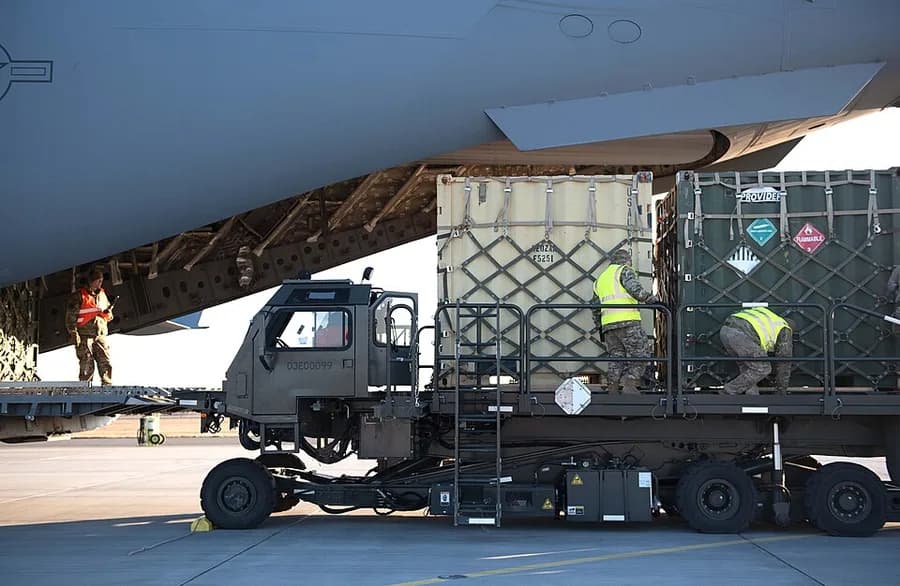
Cargo in flight is anything but static. Under FAA airworthiness rules (14 CFR 25.561), everything carried in a transport-category aircraft must be restrained against ultimate inertia loads of 9.0g forward, 6.0g downward and 3.0g sideways, while 25.855 requires that flight controls and lines inside cargo compartments can never be damaged by shifting loads. Behind these numbers lie hard lessons. In 1997, Fine Air Flight 101 crashed moments after takeoff from Miami because misloaded cargo produced an uncontrollable aft center of gravity, killing five. In 2013, at Bagram, Afghanistan, improperly restrained armored vehicles weighing roughly 80 tonnes broke loose aboard a National Airlines Boeing 747 freighter, severed two hydraulic systems and the horizontal stabilizer mechanism, and killed all seven crew members. The NTSB has repeatedly found that loss of control over cargo loading — not mechanical failure — was the fatal link. Cargo flying is not low-risk flying. According to Flight Safety Foundation analysis of NTSB data, all-cargo accident rates ran two to five times higher than passenger operations between 1996 and 2005. Meanwhile, an IATA white paper reports that more than 80% of reported dangerous-goods occurrences involved undeclared shipments, with lithium batteries the leading concern — the very cause of the 2010 UPS Flight 6 tragedy in Dubai. Restraint equipment itself is now part of the airworthiness system. The FAA's TSO-C172 (adopting SAE AS5385C) defines a minimum performance standard for cargo restraint straps rated at 5,000 lbf (about 22,250 N), with flammability and cyclic-load testing; since January 1, 2016, IATA has directed that only TSO-approved straps be used. EASA's ETSO-C172 and CAAC's CTSO-C172a complete a three-authority framework, while ISO 9788 governs double-stud fittings at the same 22,250 N capacity. The discipline must extend to unit load devices. IATA estimates roughly one million ULDs — over USD 1 billion in assets — suffer about USD 330–400 million in annual repair and loss costs, around 80% of it avoidable through proper handling. The 2026 ULD Regulations now tighten pallet-and-net compatibility standards, and Australia has made load-and-restraint training mandatory for freight forwarders from 2026. For shippers and operators, restraint compliance is not optional: certified nets, straps and fittings, restraint schemes calculated per the Weight & Balance Manual, and lifecycle inspection regimes are the baseline of safe air cargo.